Road Conditions
What the roads are actually like
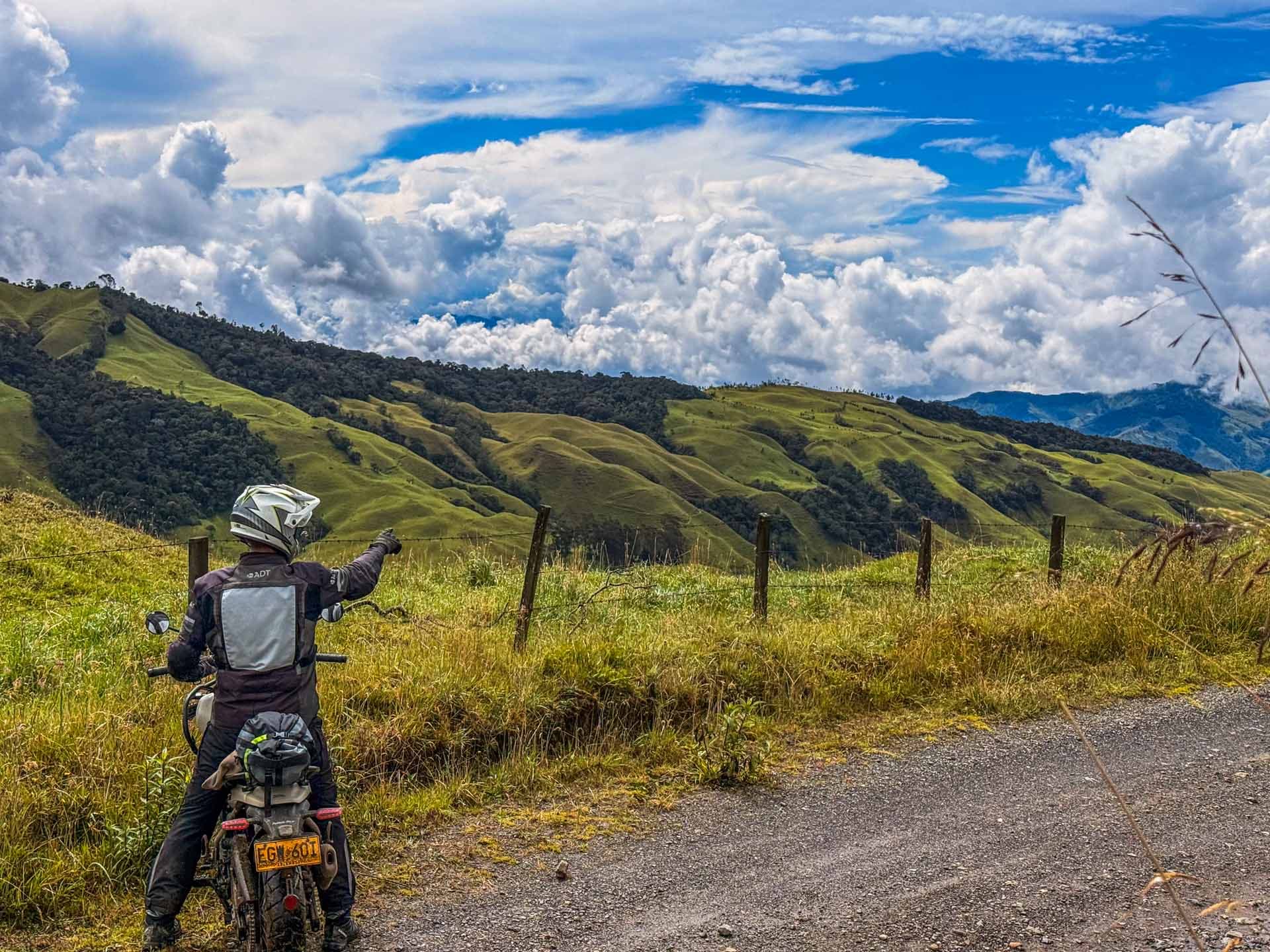
Colombian roads range from well-maintained mountain asphalt to mule tracks that ford rivers. The twelve surface types below cover essentially everything our routes use, and the recurring hazards are the same everywhere: blind-curve overtaking, livestock, landslide debris, unmarked speed bumps and afternoon rain.
How Colombian roads work
Colombia is three parallel mountain ranges with river valleys between them, and the road network follows that geography rather than fighting it. That means very few straight roads, constant elevation change, and a surface quality that can go from new asphalt to broken gravel and back inside a kilometer. It also means the riding is exceptional.
Distances mislead. Two hundred kilometers on a Colombian mountain road is a full day, not two hours. Every itinerary on this site is built around real riding time rather than map distance.
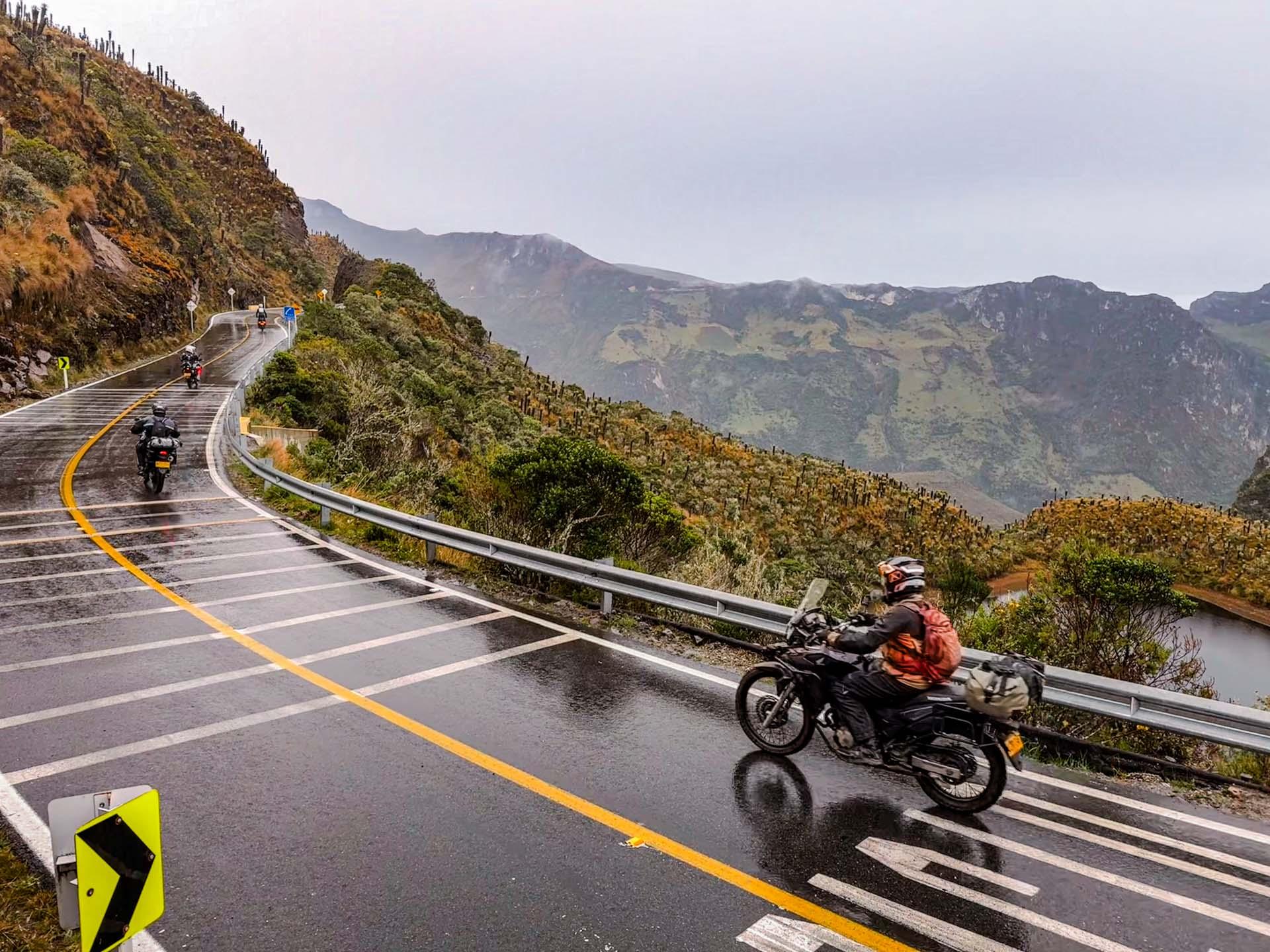
On a Colombian mountain road, distance matters less than corners, weather and elevation.
Distances mislead
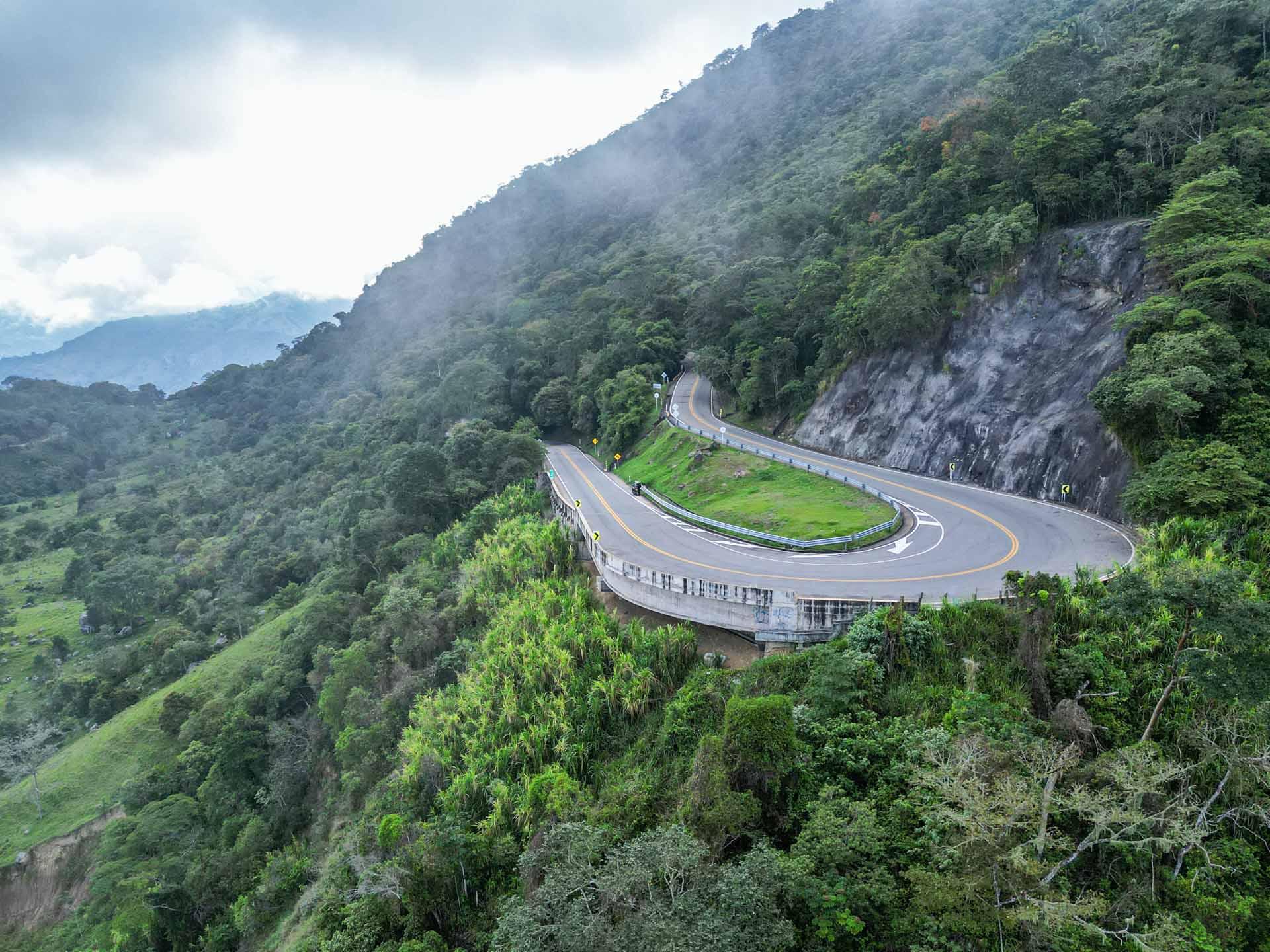
Two hundred kilometers on a Colombian mountain road is a full day, not two hours.
The twelve surfaces you will meet
| Surface | What to expect | Where |
|---|---|---|
| Primary highway | Good asphalt, two lanes, heavy truck traffic | Approaches to Medellín, Bogotá, Cali |
| Rural secondary road | Continuous curves, decent surface, light traffic | Most of the paved routes |
| Rural connecting road | Patched asphalt, scenic, occasional gravel | Between pueblos |
| Gravel and graded dirt | Well-maintained unpaved, fine on any bike | Coffee farms, valley access |
| Mountain track | Compact dirt, steep, first and second gear | Mining and village routes |
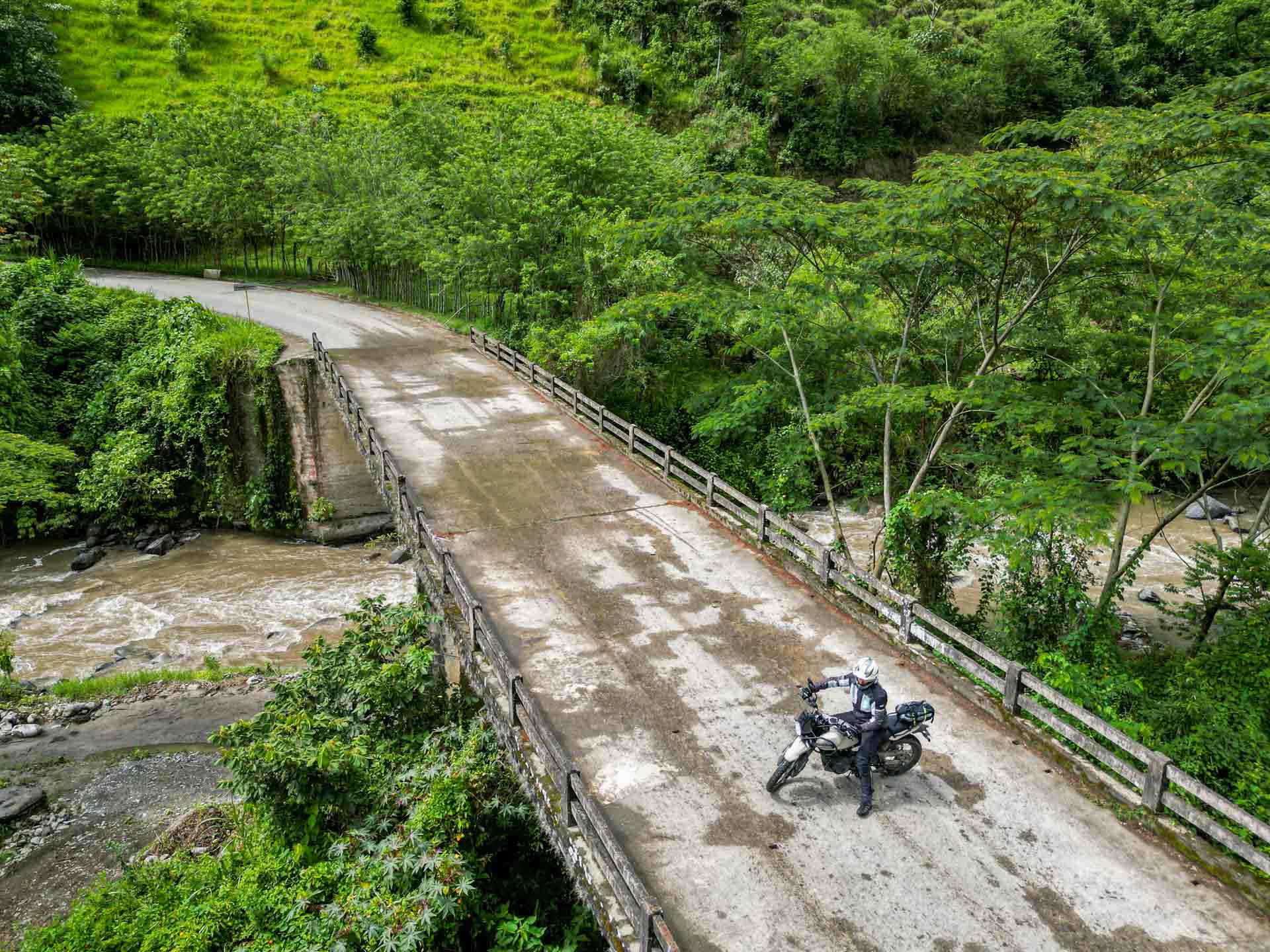
| River crossing | Shallow fords, loose rock beds | Río La Miel, off-road routes |
| Ferry | Small river barges, plank loading | Magdalena crossings |
| Wet-season road | Slick pavement, soft dirt, deep ruts | Everywhere, April–May and October–November |
| Landslide zone | Rockfall, mud, single-lane control | Any mountain road after heavy rain |
| Village street | Cobbles, unmarked speed bumps, pedestrians | Every pueblo on every route |
| Cloud-forest pass | Fog, wet surface, near-zero visibility | High passes, most afternoons |
| Coastal road | Sand drift, salt air, strong crosswinds | Caribbean routes |
Recurring hazards
- Overtaking into blind curves. Assume the oncoming lane is occupied and ride to your sight line, not to the road.
- Livestock and dogs, especially near villages and at dawn and dusk.
- Unmarked speed bumps, known as policía acostada, at the entrance to every village. They are often unpainted.
- Landslide debris after rain, sometimes within hours of the road being clear.
- Diesel and oil on wet mountain corners, particularly where trucks brake.
- Motorcycles filtering at speed in cities, from directions you are not looking.
- Loose gravel washed onto asphalt at the apex of downhill corners.
Altitude and your motorcycle
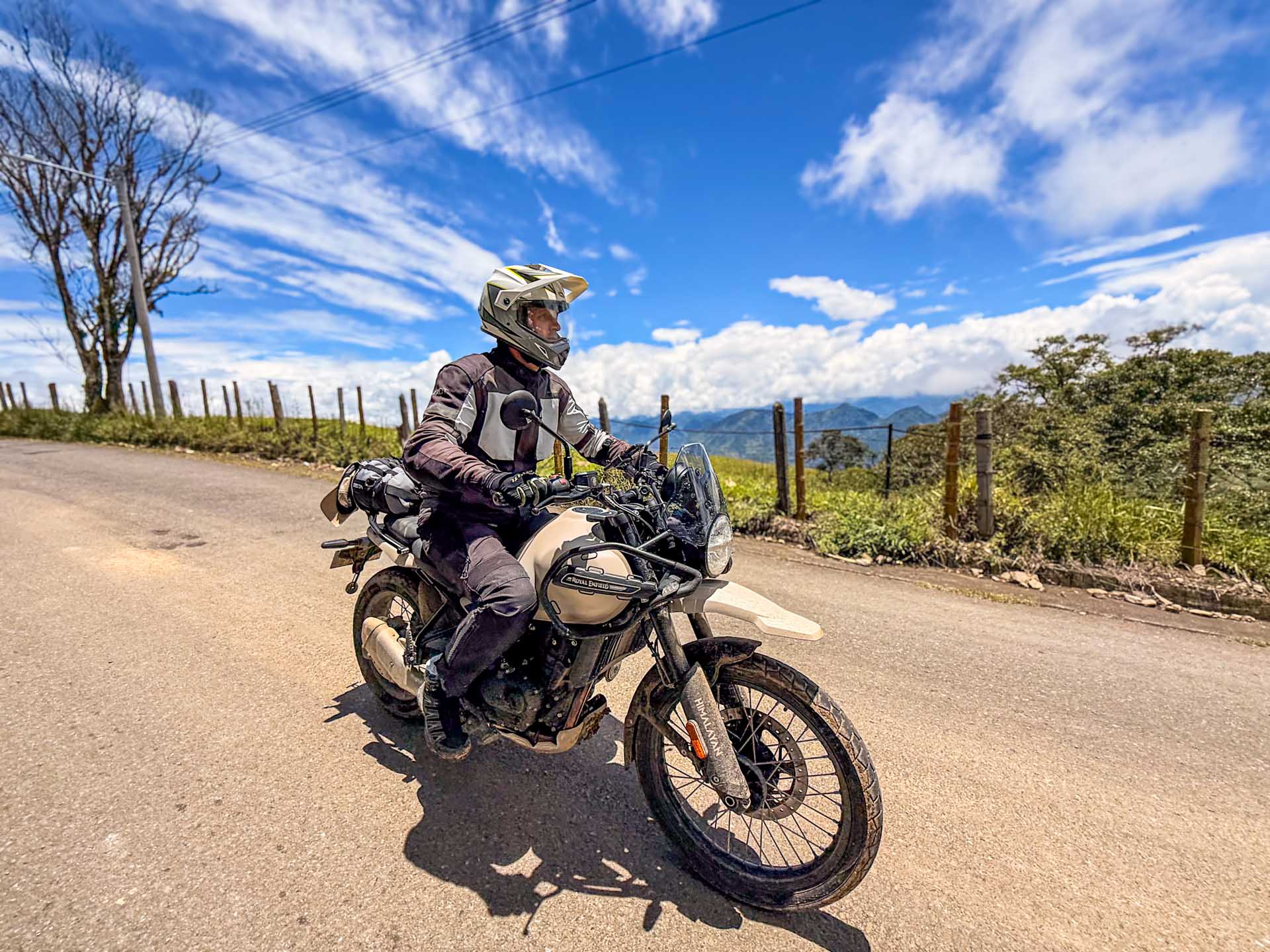
Above about 3,500 meters motorcycles lose noticeable power, carbureted bikes more than fuel-injected ones. Expect slower climbs, more gear changes and longer overtakes on the volcano roads. It is normal and it is not a fault with the bike. Riders lose performance too: reaction time and judgment both degrade at altitude, so the high days on our itineraries are deliberately shorter.
High-altitude days are deliberately shorter: both rider and motorcycle work harder above 3,500 meters.
Rules and paperwork
Helmets are mandatory for rider and passenger, everywhere, always.
Headlights on at all times, day and night.
Reflective vest required. We supply one with every rental.
Carry your license, passport copy, SOAT and the bike's papers. Roadside checks are routine and polite.
Blood alcohol limits are strict and enforcement is serious. Do not drink and ride at all.
Pico y placa restricts circulation by plate number on weekdays in the big cities.
Common questions
Not for the paved routes, which run on good asphalt throughout. For the mixed routes you should be comfortable on graded gravel. For the off-road routes you need genuine dirt experience: loose steep climbs, river crossings and hours a day standing on the pegs.
On paved mountain roads, 250 to 350 km is a comfortable day. On dirt, 120 to 180 km is a long one. Our off-road itineraries have days under 100 km that still take eight hours.
Yes. The primary network is good asphalt and improving. It is the roads to the places worth going (the pueblos, the river valleys, the high páramo) that are unpaved, which is rather the point.
Ready to ride this one?
Send us your dates and how hard you like to ride. We answer the same day, every day of the year.