Is Colombia Safe?
The honest answer
Colombia is safe to ride in the regions our routes cover (Antioquia, the Coffee Region, Boyacá, Santander, Huila and the Caribbean coast), provided you take normal precautions and do not ride at night. The practical risks for a visiting motorcyclist today are road hazards and opportunistic city theft, not the security problems the country is still known for.
The short version
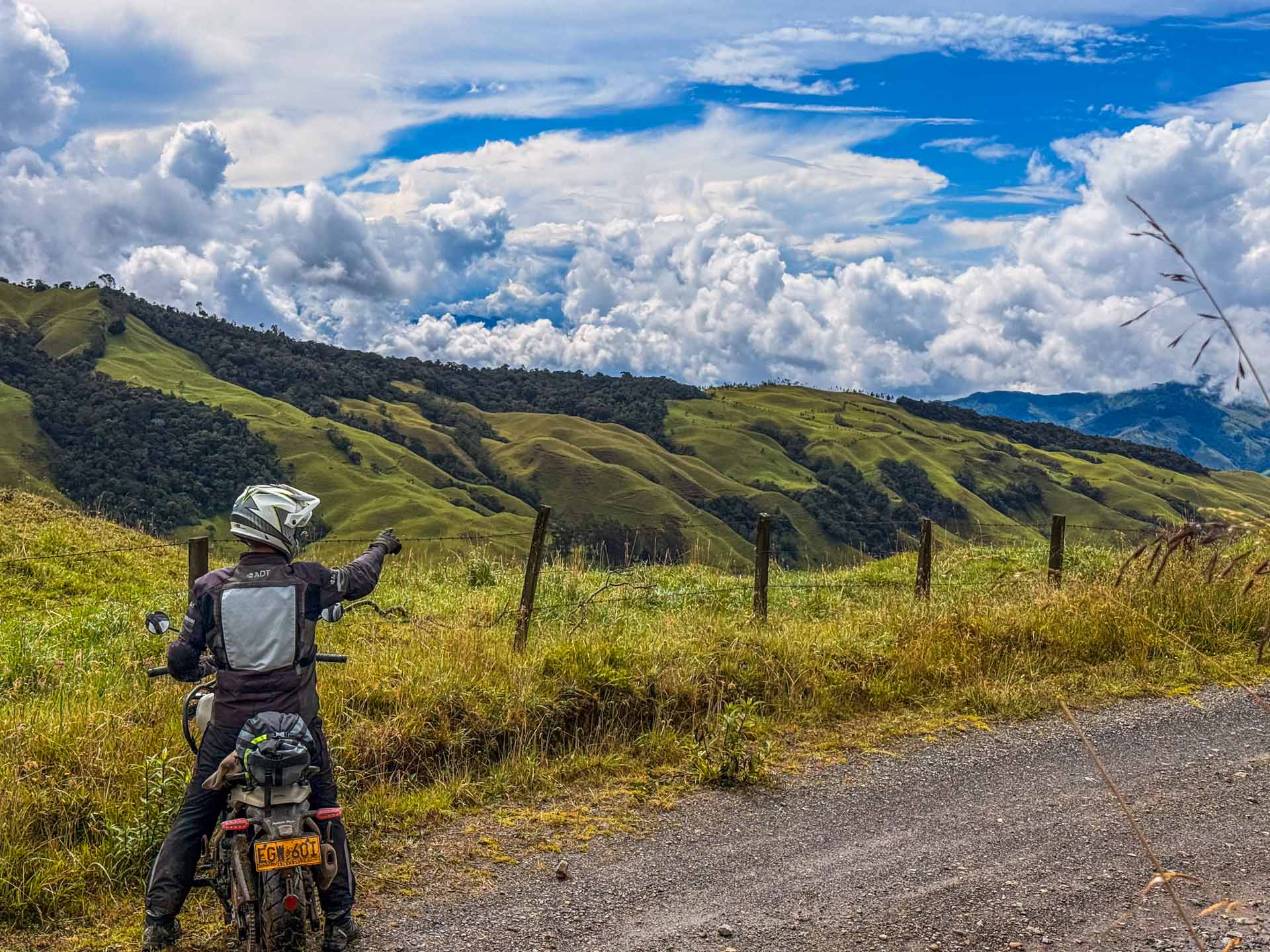
This is the question we get more than any other, and it deserves a straight answer rather than reassurance. Colombia in 2026 is not the Colombia of the headlines most visitors grew up with. The 2016 peace agreement, and the two decades of change before it, reshaped the country. The regions our routes cross are ordinary working places with tourism, agriculture and traffic police.
That said, Colombia is large and it is not uniformly safe. There are regions with active armed groups and coca economies that no responsible operator takes visitors into. We do not run routes there, and the honest reason our route map looks the way it does is that it has been drawn around those areas as much as around the good roads.
So the useful version of the question is not "is Colombia safe" but "is this route safe, on this date, with this operator". The rest of this page answers that one.
Where we ride, and where we do not
Our route map is a safety decision before it is a scenic one. These are the departments we operate in and the ones we will not take you through at any price.
We ride here
- Antioquia: most routes. Heavy tourism, well policed
- Coffee Region: Caldas, Risaralda, Quindío
- Boyacá and Santander: rural, quiet, very low crime
- Huila and Tolima: Tatacoa and San Agustín
- Caribbean coast: busy tourist region
- Valle del Cauca and Cali, with a guide
We do not route here
- Chocó
- Catatumbo
- The interior of Cauca
- The Nariño border region
- Anywhere without a support network we trust
- Any road our contacts tell us not to use that week
Region by region
| Region | On our routes | What that means in practice |
|---|---|---|
| Antioquia | Yes, most routes | Well policed, heavy tourism, excellent roads |
| Coffee Region (Caldas, Risaralda, Quindío) | Yes | Among the safest departments in the country |
| Boyacá & Santander | Yes | Rural, quiet, very low crime |
| Huila & Tolima | Yes | Tatacoa and San Agustín are established destinations |
| Caribbean coast | Yes | Busy tourist region; city-style precautions apply |
| Valle del Cauca (Cali) | Yes, with a guide | Fine in the areas we use; we brief you on the rest |
| Chocó, Catatumbo, Cauca interior, Nariño border | No | Active groups or no reliable support network |
One rule we do not bend
We do not ride at night.
Unlit mountain roads, livestock, unmarked obstacles and drunk drivers all get worse after dark, and so does everything else. Every itinerary we run is built so the day finishes with daylight to spare. On a self-guided rental it is the one thing we ask you to promise.
The real risks, in order
What actually hurts people
Ranked by how likely each one is to affect you. The order surprises people: the thing Colombia is famous for is not on the list, and the thing that is barely gets discussed.
The road itselfMost likely
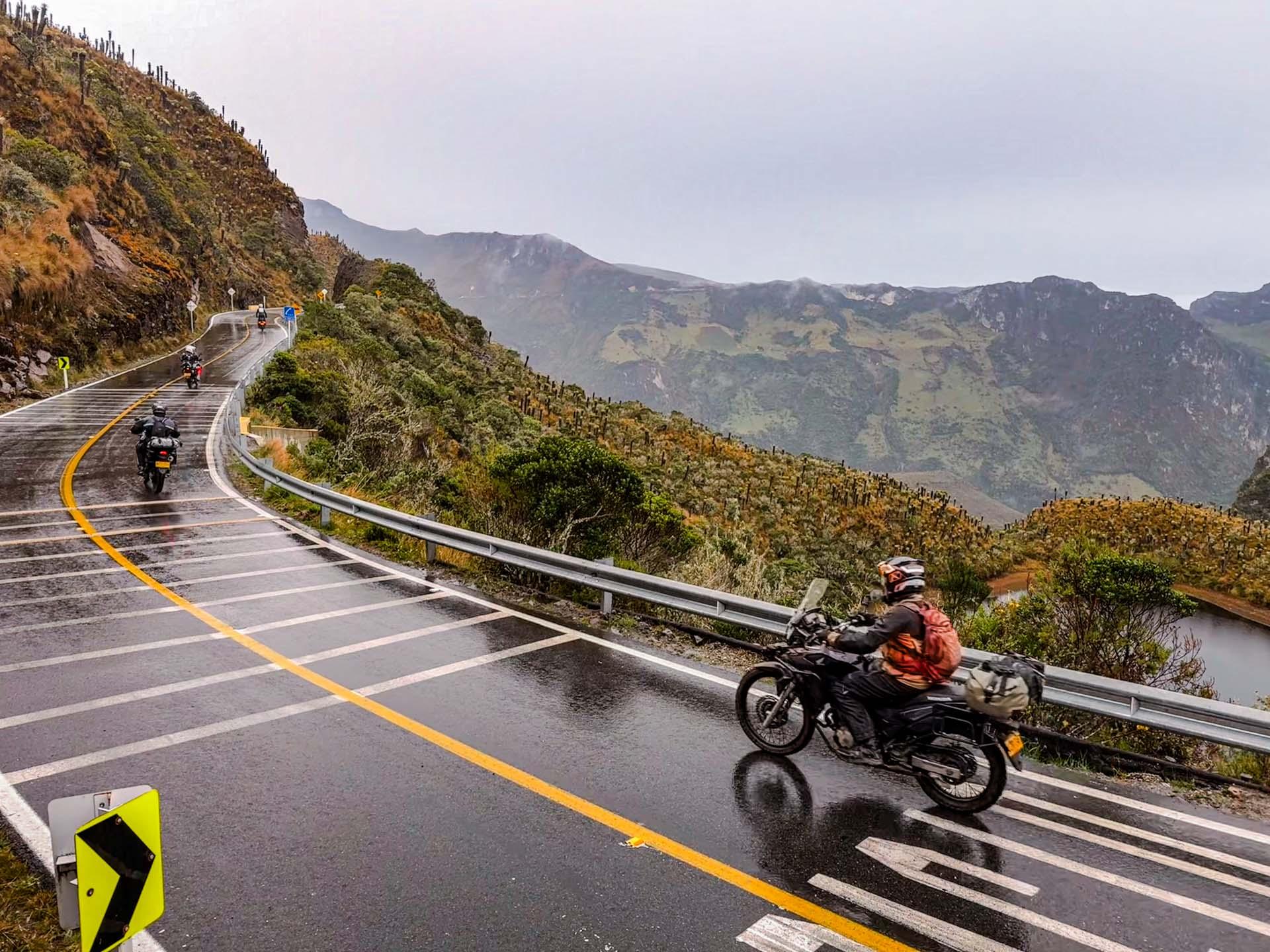
By a wide margin. Blind curves with vehicles overtaking into them, livestock on the carriageway, landslide debris after rain, unmarked speed bumps at every village entrance, and diesel spilled on wet mountain corners. Ride to your sight line, not to the road, and assume the truck ahead will pull out.
Riding after darkAvoidable
Every hazard above gets worse at night, and unlit mountain roads remove the margin you were relying on. This is entirely avoidable, which is why it is our one hard rule rather than a recommendation.
Opportunistic theftCity only
Phone snatching, and things left visible on a parked bike. The Colombian phrase is no dar papaya, meaning do not hand anyone an easy opportunity. Guarded parking is everywhere and costs a couple of dollars; use it, and take your luggage off the bike overnight.
What a normal day actually looks like
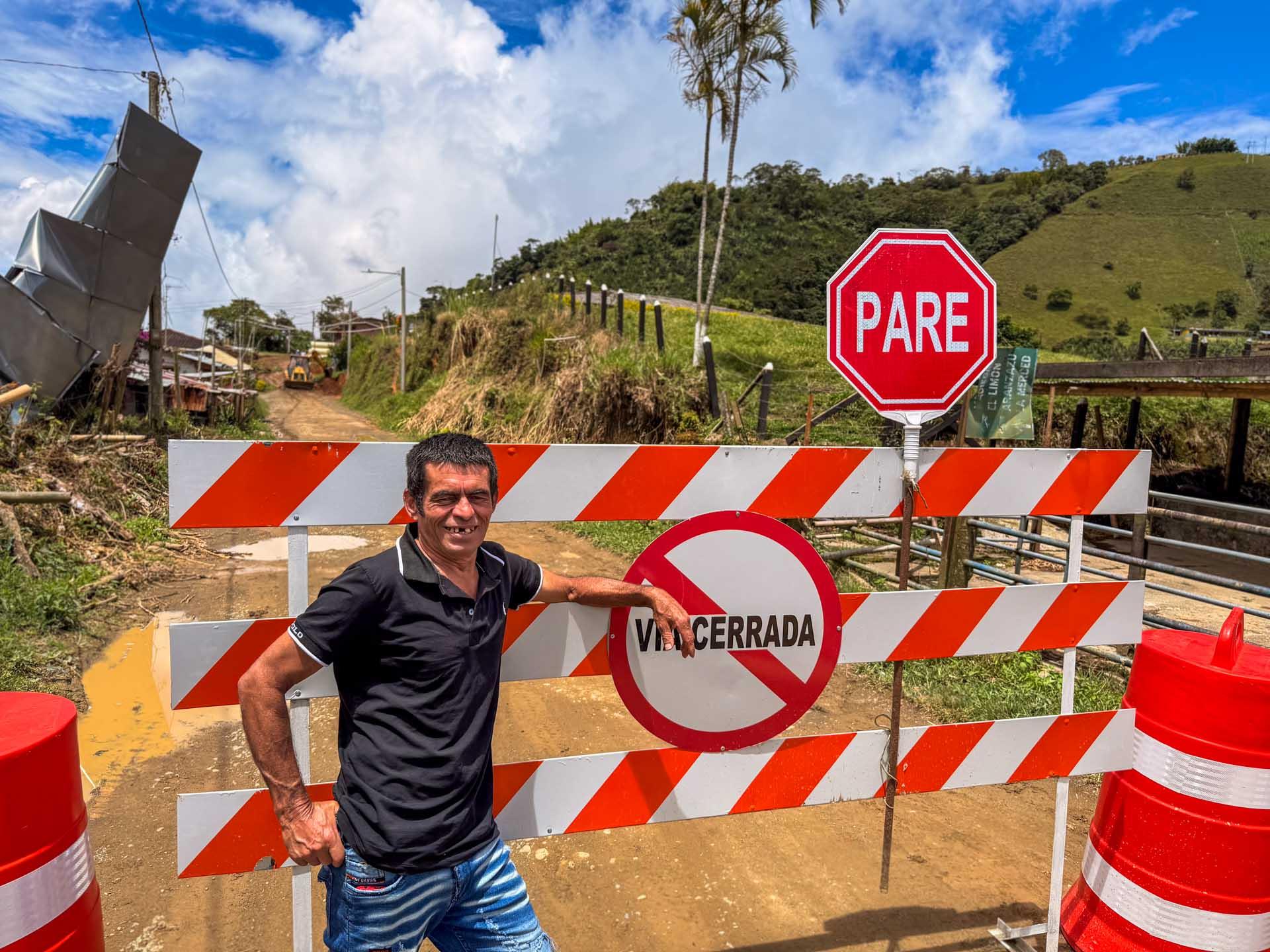
The single-lane road controls you will meet a dozen times are the most Colombian thing about riding here. They are called a pare y siga: a flagger holds one direction while the other passes a landslide repair or a bridge. You queue, you turn the engine off, someone sells you a coffee, and ten minutes later you go.
That is the texture of a riding day in this country. Not danger: patience, and roadside coffee, and people who are pleased you came.
A pare y siga on a mountain road. Expect several a day in the wet season. They are a delay, not a hazard.
What we do about it
Every route is pre-ridden and re-checked before a departure runs
We monitor road status, weather and the volcano bulletin, and reroute rather than push through
Guides carry a first-aid kit, a tool kit and the regional emergency contacts
Accommodation is always in towns with secure parking
We keep contact with hotels and fixers in every town on the network
Daily check-in with self-guided riders, so someone always knows where you are
How we operate
Practical advice
- Do not ride at night. Everything else on this list is secondary to that one.
- Carry a copy of your passport and license; leave the originals in the hotel safe unless you are crossing a department line.
- Use guarded parking (parqueadero). It is standard and costs a couple of dollars.
- Keep your phone out of sight in city traffic.
- Carry cash in small notes. Rural fuel stations and small hotels often will not take a card.
- Learn one number: 123 is the emergency line nationwide.
- Tell someone your route each day: the guide on a tour, us on a rental.
- Take travel insurance that explicitly covers motorcycling at your bike's engine size.
Common questions
In the regions our routes cover, yes. The practical risks are road hazards and opportunistic city theft rather than the security problems Colombia is still known for. Do not ride at night, use guarded parking, and treat the road itself as the main danger.
Yes. We do not route through Chocó, Catatumbo, the interior of Cauca or the Nariño border region. Those areas either have active armed groups or no reliable support network, and no schedule is worth riding into them.
On our paved and mixed routes, yes, and plenty of riders do. You get the route, hotel recommendations, a daily check-in and 24-hour phone support. We ask you to keep to the agreed route and to tell us if you change it, because that is how we can reach you if a road closes.
Call us. Support runs 24 hours, every day of the year. Guides carry first aid and tools and hold the regional emergency contacts. For anything medical, 123 is the national emergency line, and we strongly recommend travel insurance with evacuation cover.
No. Our guides are bilingual and our support line answers in English. Outside the cities most people speak no English, so a translation app helps for hotels and fuel stops, but it is a convenience, not a safety issue.
Yes, and we host solo women riders regularly. The precautions are the ones any rider takes here: no night riding, guarded parking, and staying on the agreed route. Tell us if you would prefer accommodation vetted with that in mind and we will arrange it.
Ready to ride this one?
Send us your dates and how hard you like to ride. We answer the same day, every day of the year.